Joseph Stalin


When there's a person, there's a problem. When there's no person, there's no problem.

Biography


On December 18, 1879, in the Russian peasant village of Gori, Georgia, Iosif Vissarionovich Dzhugashvili - later known as Joseph Stalin - was born. The son of Besarion Jughashvili, a cobbler, and Ketevan Geladze, a washerwoman, Joseph was a frail child. At age 7, he contracted smallpox, leaving his face scarred. The other village children treated him cruelly, instilling in him a sense of inferiority. Because of this, Joseph began a quest for greatness and respect. He also developed a cruel streak for those who crossed him. Joseph did well in school, and his efforts gained him a scholarship to Tiflis Theological Seminary in 1894. A year later, Joseph came in
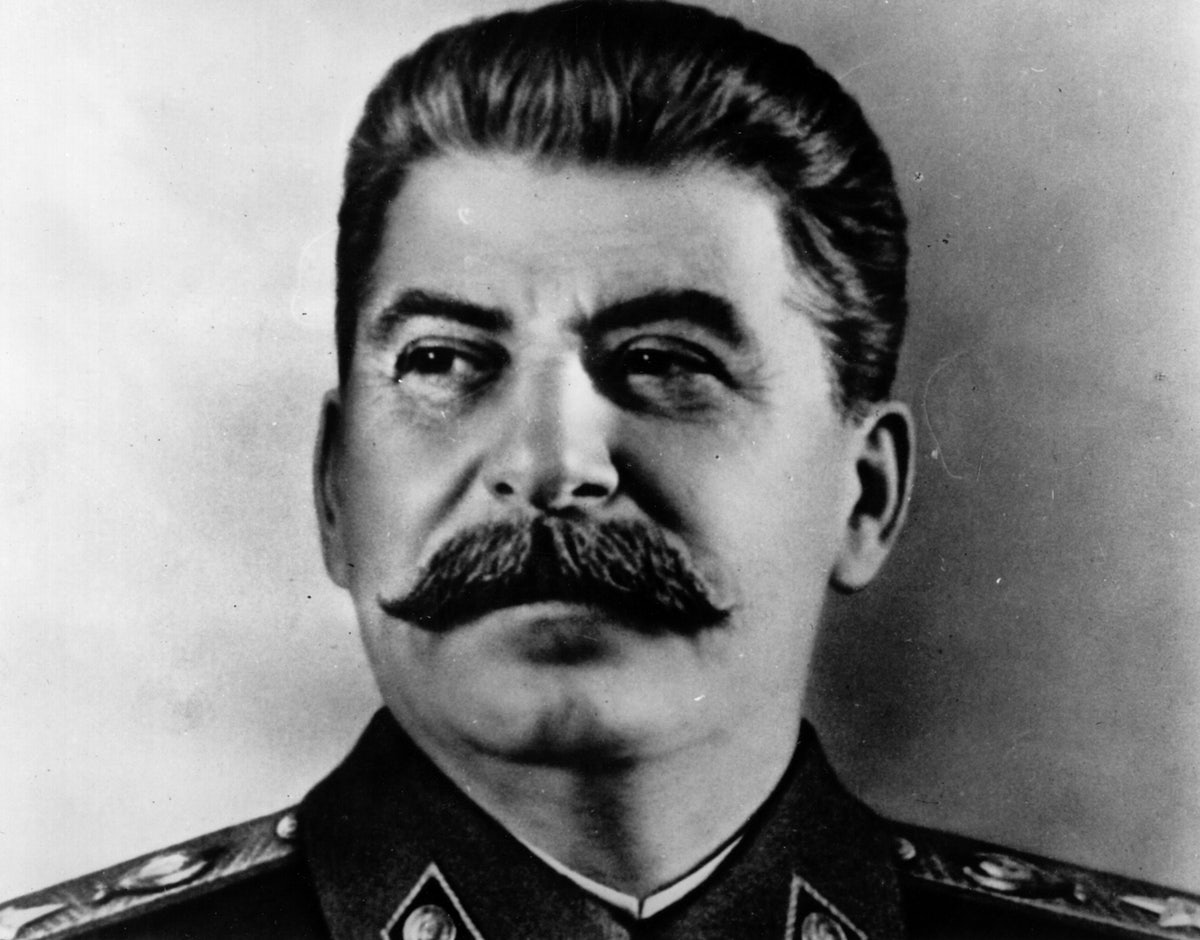
contact with Messame Dassy, a secret organization that supported Georgian independence from Russia. Some of the members were socialists who introduced him to the writings of Karl Marx and Vladimir Lenin. Joseph joined the group in 1898.Though he excelled in seminary school, Joseph left in 1899. Accounts differ as to the reason; official school records state he was unable to pay the tuition and withdrew. It's also speculated he was asked to leave due to his political views challenging the tsarist regime of Nicholas II. Joseph chose not to return home, but stayed in Tiflis, devoting his time to the revolutionary movement. For a time, he found work as a tutor and later as a clerk at the Tiflis Observatory. In 1901, he joined the Social Democratic Labor Party and worked full-time for the revolutionary movement.

Video
A single death is a tragedy; a million deaths is a statistic.

- Joseph Stalin

Education is a weapon, whose effect depends on who holds it in his hands and at whom it is aimed.

- Joseph Stalin

History has shown there are no invincible armies.

- Joseph Stalin

It is not heroes that make history, but history that makes heroes.

- Joseph Stalin

Death is the solution to all problems. No man - no problem.

- Joseph Stalin

Hobby


Being quite a philosophical person, he was very interested in history at that time, and read books very often, sometimes daily. It’s said that he claimed to read “around 500 pages a day.” He was very hard working, and was often found writing and studying very late at night. He wrote a few books in his time too.“The pinkish bud has opened", "Rushing to the pale-blue violet" And, stirred by a light breeze", and "The lily of the valley has bent over the grass". Under the pen name Soselo, he authored and published dozens of poems.

His mother sent him to study to become a priest


In December 1895, Stalin’s mother sent him to a seminary in the Georgian capital of Tiflis (modern-day Tbilisi). He rebelled against studying scripture, however, instead reading the writings of Karl Marx and joining a local socialist group. Eventually he became an atheist, and in 1899 was expelled from the seminary for failing to attend exams.

His eldest child died in a Nazi concentration camp


Stalin’s son from his first marriage, Yakov, was a soldier in the Red Army during World War Two and was either captured or surrendered in the initial stages of the German invasion of the Soviet Union. The Nazis proposed to free him in a prisoner swap but Stalin refused, possibly because he believed that Yakov had surrendered voluntarily. He died in Sachsenhausen concentration camp in 1943.

He developed his own brand of Marxism


Like Lenin before him, Stalin also had his own interpretation of Marxism. In Stalin’s case this interpretation was very nationalistic and focused on building up the Soviet Union rather than on global revolution.


More Pictures of Joseph Staling

Gallery

Made by Nikola Novoselski and Vasil Nikolov

Map About us