Think Thousand times before taking a decision But - After taking decison never turn back even if you get Thousand difficulties!
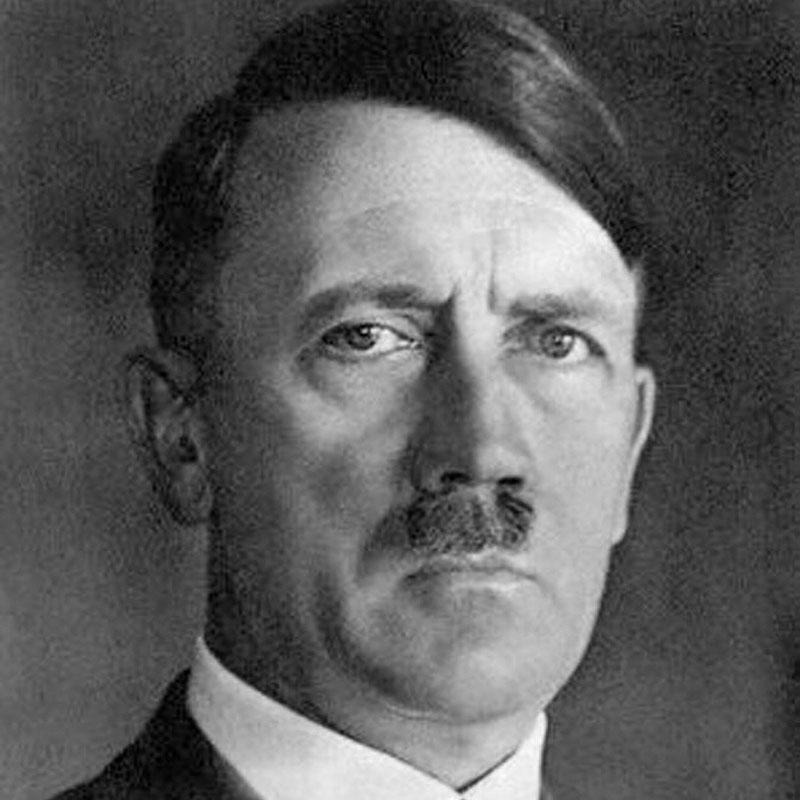
Adolf Hitler was born on April 20, 1889, in Branau am Inn, a small Austrian town near the Austro-German frontier. After his father, Alois, retired as a state customs official, young Adolf spent most of his childhood in Linz, the capital of Upper Austria. Not wanting to follow in his father’s footsteps as a civil servant, he began struggling in secondary school and eventually dropped out. Alois died in 1903, and Adolf pursued his dream of being an artist, though he was rejected from Vienna’s Academy of Fine Arts. After his mother, Klara, died in 1908, Hitler moved to Vienna, where he pieced together a living painting scenery and monuments and selling the images. Lonely, isolated and a voracious reader, Hitler became interested in politics during his years in Vienna, and developed many of the ideas that would shape Nazi ideology.
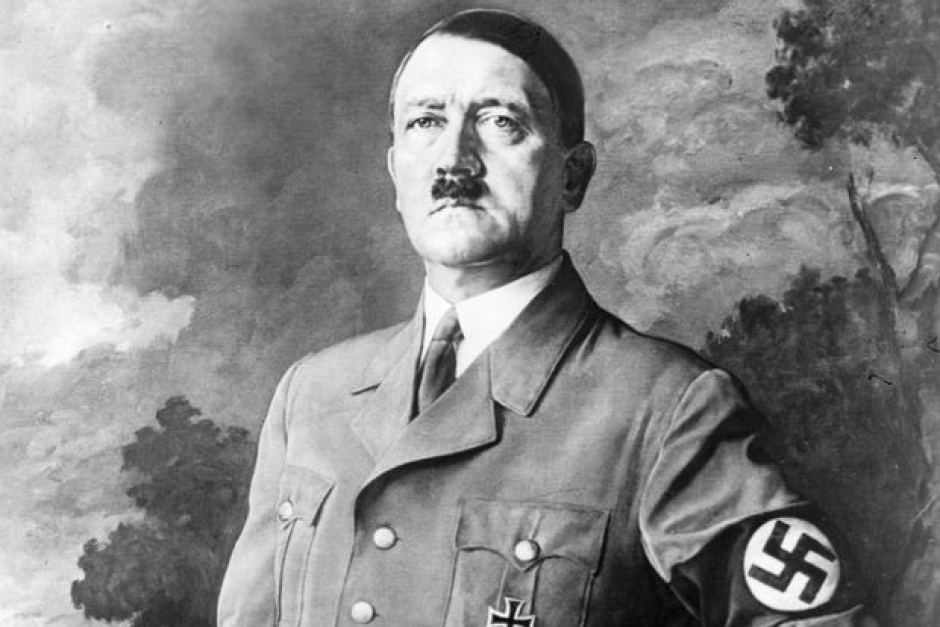
In 1913, Hitler moved to Munich, in the German state of Bavaria. When World War I broke out the following summer, he successfully petitioned the Bavarian king to be allowed to volunteer in a reserve infantry regiment. Deployed in October 1914 to Belgium, Hitler served throughout the Great War and won two decorations for bravery, including the rare Iron Cross First Class, which he wore to the end of his life. Hitler was wounded twice during the conflict: He was hit in the leg during the Battle of the Somme in 1916, and temporarily blinded by a British gas attack near Ypres in 1918. A month later, he was recuperating in a hospital at Pasewalk, northeast of Berlin, when news arrived of the armistice and Germany’s defeat in World War I.Like many Germans, Hitler came to believe the country’s devastating defeat could be attributed not to the Allies, but to insufficiently patriotic “traitors” at home—a myth that would undermine the post-war Weimar Republic and set the stage for Hitler’s rise.
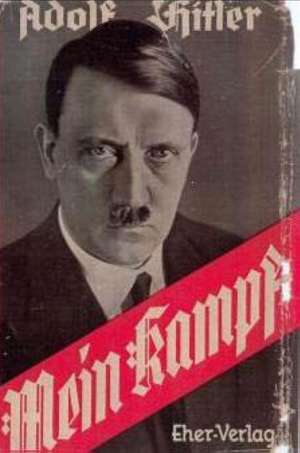
Video GalleryIn 1924, while in prison for high treason, Hitler began writing what would later be considered one of the world’s most dangerous books. In Mein Kampf (“My Struggle”), which was initially published in two volumes (1925, 1927), Hitler chronicled his life and presented his racist ideology; he claimed to have become “a fanatical anti-Semite” while living in Vienna. Although it initially had only limited success, Mein Kampf’s popularity grew as did that of Hitler and the Nazis. A bible of National Socialism, it was required reading in Germany, and by 1939 more than five million copies had been sold. After Hitler’s death, the work was banned in Germany and other countries, and the German state of Bavaria, which held the copyright, refused to grant publishing rights. However, some foreign publishers continued to print the work, and in 2016 it entered the public domain after the copyright expired. Days later a heavily annotated Mein Kampf was published in Germany for the first time since 1945. It became a best seller.
In 1939 a Swedish legislator nominated Hitler for the Nobel Peace Prize. Although he intended it as a joke, few found it amusing. Instead, it created an uproar, and the nomination was quickly withdrawn. Not that Hitler would have wanted—or even been able to accept—the award. In 1936 German journalist Carl von Ossietzky, a vocal critic of Hitler, had been named the winner of the 1935 peace prize. The gesture was seen as a censure of Nazism and an “insult” to Germany. As a result, Hitler barred all Germans from accepting a Nobel Prize and created the German National Prize for Art and Science as an alternative. The three Germans who subsequently won Nobels during the Third Reich were forced to decline their awards, though they later received the diplomas and medals.
In attempting to build a master “Aryan” race, the Nazis were known for promoting health-conscious policies. So, it is perhaps not surprising that Hitler was reportedly a teetotaler, nonsmoker, and vegetarian. However, his healthy habits were undermined by his alleged use of opiates. According to recent research, in 1941 his personal physician, Theodor Morell, began injecting him with various drugs, including oxycodone, methamphetamine, morphine, and even cocaine. In fact, drug use was reportedly prevalent throughout the Nazi Party, and soldiers were often given meth before battle. Near the end of his life, Hitler was prone to shaking, and, while some have attributed this to Parkinson disease, others have speculated it was withdrawal from drugs, which by then were hard to obtain.
Perhaps spurred by his earlier poverty, Hitler seemed determined to amass a personal fortune. Much of his money came from predictable sources—siphoning off government money and accepting “donations” from corporations. However, he also undertook more creative schemes. After becoming chancellor, he notably ordered the government to buy copies of his Mein Kampf to give as state wedding gifts to newlyweds, leading to hefty royalties for Hitler. In addition, he refused to pay income tax. He used his vast wealth—which some estimated was about $5 billion—to amass an extensive art collection, purchase fine furnishings, and acquire various properties. After the war, his estate was given to Bavaria.